
Screen-Free Sight Word Games You Can Play Anywhere
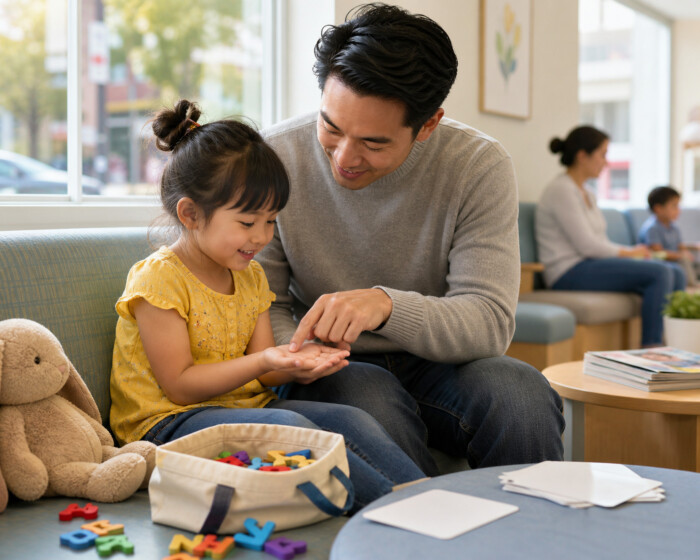
The grocery store line is moving slowly, the car ride feels endless, or you’re the fifth family waiting at the pediatrician’s office. The easy move is to hand over a phone. But these small pockets of downtime are actually some of the best sight word practice your kindergartener or 1st grader will get all week — no worksheets, no tablet, and no one even has to know it’s “practice.”
All you need is a few sight words your child is currently working on and a little creativity. Here are simple, screen-free games that turn ordinary waiting time into reading time.
Why waiting-room moments make such good practice time
Idle minutes are low-pressure by nature. There’s no workbook in sight, no sense of being “tested,” and no pencil to grip. That relaxed atmosphere is exactly when repetition sticks best. A child who spots the word “stop” on a sign for the tenth time this month is getting real, meaningful practice, even if it never feels like a lesson.
In the car
- I spy a word. Call out a sight word and have your child hunt for it on street signs, storefronts, or license plates — “stop,” “exit,” and “open” show up everywhere once you start looking.
- Word of the drive. Pick one word before you pull out of the driveway. Whoever spots it first out the window gets to choose the next word.
- Rhyme chain. Say a sight word out loud and see how many rhyming words you can list together before you reach your destination.
In line or in the waiting room
- Palm spelling. Trace a sight word on your child’s palm or back with your finger and have them guess the word, then switch roles.
- Tiny scavenger hunt. Whisper a target word and challenge your child to find it somewhere nearby — a cereal box, a magazine cover, a sign on the wall.
- Silent countdown. Give a word and see how many seconds it takes your child to read it out loud once you say “go.” Try to beat your own time next round.
At home without a table or a worksheet
- Sidewalk chalk words. Write a handful of sight words on the driveway and have your child hop from word to word, calling each one out as they land.
- Sticky note hunt. Stick words around the kitchen or living room and send your child off to find and read each one.
- Build it. Use magnetic letters, alphabet blocks, or even dry pasta shapes to build a word together, then mix up the letters and build it again.
Keep it light, not a lesson
The whole point of these games is that they don’t feel like schoolwork. Keep sessions short — a minute or two is often enough — and stop before your child loses interest. If a word isn’t landing, just say it together and move on rather than drilling it into the ground. The goal is light, frequent exposure, not a formal quiz in disguise.
The takeaway
You don’t need a special time of day or a stack of flashcards to build sight word recognition. The car ride, the checkout line, and the backyard are already full of opportunities — they just need a little imagination. Keep a few current words in your back pocket, turn to one of these games the next time you’re waiting on something, and watch how much practice sneaks in without anyone noticing.