
How to Teach Sight Words to Your Kindergartener
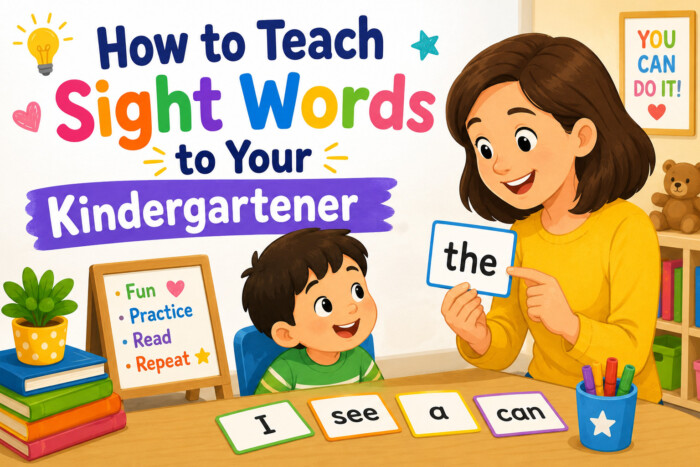
Sight words are the small, common words that show up on nearly every page a young reader meets: the, and, is, you, was, said. Many of them do not follow regular spelling rules, so children learn them best by recognizing the whole word on sight rather than sounding each one out. Once a child can read these words instantly, reading starts to feel smoother and a lot more fun, because their attention is freed up for the words that carry the story.
The good news is that you do not need worksheets or flashcards stacked to the ceiling. A few short, friendly sessions each week will do more than one long, tiring drill. Here is a simple approach that works at home or in the classroom.
Start with just a few words
Pick five words to focus on at a time. Trying to teach twenty at once usually leads to a child who recognizes none of them well. Five feels achievable, and that small win builds confidence. Once a child can read all five quickly and without hesitation, retire them to a “words I know” pile and bring in five new ones.
Make it more than just looking
Children remember words better when more than their eyes are involved. After you read a word together, try one of these:
- Have your child trace the letters in the air, on a table, or in a tray of sand or flour.
- Build the word with letter tiles, magnets, or even small toys lined up.
- Say the word, clap once for each letter, then say it again.
The goal is to connect the look of the word with movement and sound so it sticks.
Put the words where they belong: in real reading
A sight word learned in isolation is only half learned. Children need to see these words doing their job inside real sentences. When you read a picture book together, pause and point at a word your child is practicing. Let them spot it and read it. You can also write a short, silly sentence using the week’s words and read it together a few times.
This step matters more than any flashcard. It teaches your child that these words are not a separate school task but the building blocks of every book they will ever open.
Turn practice into a game
Short games keep the mood light and the learning steady. A few that need almost no prep:
- Word hunt. Write the target words on sticky notes and hide them around the room. Each found word gets read aloud.
- Matching. Write each word twice on small cards and play a memory-matching game.
- Beat the timer. Lay out the words and see how many your child can read before a one-minute timer runs out. Tomorrow, try to beat today’s number.
Games turn repetition, which can feel like a chore, into something a child actually asks to do again.
Keep sessions short and warm
Five to ten minutes is plenty for a kindergartener. Stop while it is still going well rather than pushing until your child is frustrated. End on a word they know so they finish feeling successful. Praise effort, not just correct answers, so a tricky day still feels like progress.
Review more than you think you need to
A word read correctly today is not a word learned forever. Cycle older words back into your games and reading so they stay fresh. A quick mix of new and familiar words in each session is the quiet secret behind lasting recognition.
The takeaway
Teaching sight words is less about intensity and more about consistency. A few minutes most days, plenty of variety, and a steady, encouraging tone will carry your child further than any marathon study session. Keep it small, keep it playful, and keep the words connected to real reading, and you will watch recognition grow week by week.