
Why Your Child Wants to Read the Same Book Over and Over (and Why That’s a Good Thing)
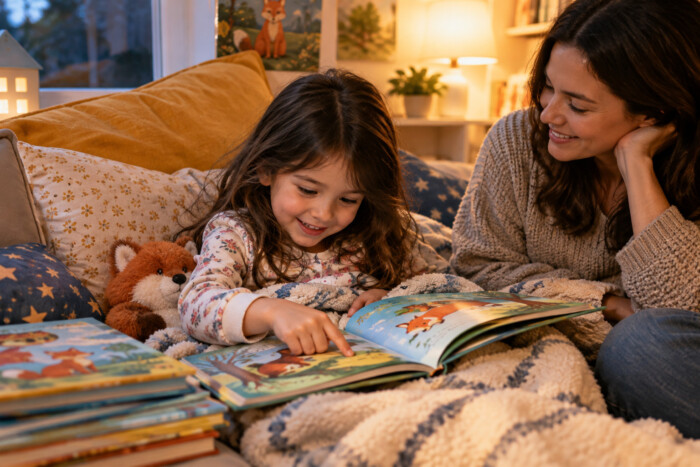
You’ve read “Brown Bear, Brown Bear” for the ninth night in a row, and when you reach for something new, you get a firm “no, THIS one” in return. If your kindergartener or 1st grader seems stuck on repeat, you’re not doing anything wrong — and neither are they. Repetition isn’t a rut. For a beginning reader, it’s some of the most valuable practice there is.
Here’s what’s actually happening when your child asks for the same book again, and why letting them have it is often better for their reading growth than pushing something new.
Why repeated readings work so well at this age
- The hard part is already solved. On a first read, a beginning reader is doing enormous work just figuring out the words. By the fifth or sixth read, decoding takes far less effort, freeing up attention for fluency, expression, and meaning.
- Confidence compounds. Nothing builds a reader’s sense of “I can do this” like sailing through a book they once had to sound out word by word.
- Vocabulary needs more than one pass. Most new words don’t stick after a single exposure. Hearing and reading the same words again in context is often what makes them finally click.
- Fluency is a rehearsal skill. Smooth, expressive reading comes from practice, not from reading something for the very first time. Repeated books are essentially free fluency practice.
What your child gets from a familiar book that a new one can’t offer
A book your child has heard many times lets them predict what comes next, notice details they missed before, and focus on “reading like a reader” instead of “decoding like a beginner.” That shift — from effortful decoding to confident, expressive reading — is exactly the milestone sight word and phonics practice is building toward.
How to make the most of repeat reads
- Let them lead parts of it. Pause before a predictable word or phrase and let your child fill it in.
- Ask a new question each time. “What do you think the bear is feeling here?” keeps a familiar book fresh without replacing it.
- Point out a sight word in the wild. A word your child is currently practicing, like “said” or “went,” often shows up right there in the story — a great moment to notice it together.
- Hand over the reins. Once a book is truly familiar, let your child “read” it to you, even if they’re partly reciting from memory. That’s not cheating — it’s rehearsal, and it still builds confidence and fluency.
When it’s time to add something new
You don’t need to retire the favorite to make room for a new book — just add to the rotation. A good rule of thumb: keep one or two well-loved, nearly-memorized books in the mix alongside something your child hasn’t seen before. That way they get the confidence boost of the familiar and the stretch of the new, in the same reading session.
The takeaway
A child who wants the same book again isn’t stalling — they’re doing exactly what a developing reader should be doing: building fluency, confidence, and vocabulary through repetition. Let the favorites stick around as long as they’re wanted, and trust that the “boring” tenth read is doing real work.