
What to Do When Your Child Guesses Instead of Sounding It Out
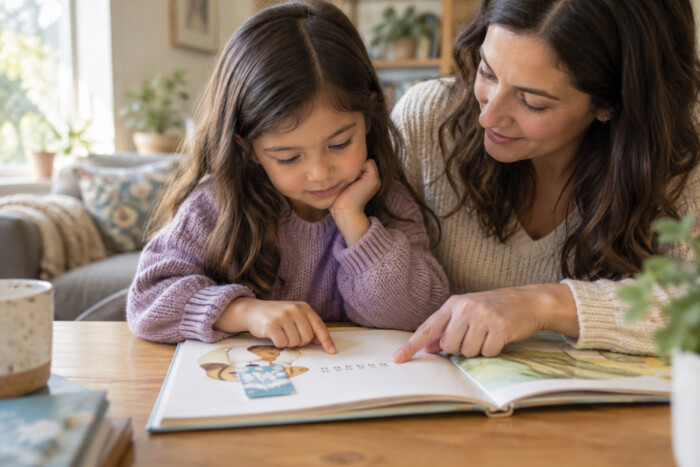
Your child glances at the picture of a dog on the page, confidently says “puppy,” and keeps right on going — even though the word printed underneath is “dog.” It’s a familiar moment for parents of kindergarteners and 1st graders, and it can feel like a step backward. In reality, guessing is a completely normal phase for early readers. The goal isn’t to eliminate guessing overnight, but to gently shift your child’s habit from guessing first to checking the letters first.
Why kids guess instead of decode
Sounding out a word takes real effort — a beginning reader has to notice each letter, recall its sound, and blend those sounds together, all before the sentence even makes sense. Guessing from a picture, the first letter, or the general shape of a story is simply faster and easier, especially when a child is tired, rushing, or eager to keep the story moving. It’s not laziness; it’s a reader taking the path of least resistance because decoding hasn’t become automatic yet.
Signs your child is leaning on guessing
- The substituted word makes sense but doesn’t match the letters. Saying “puppy” for “dog” or “mom” for “mother” shows they’re reading the meaning, not the word on the page.
- They read the first letter and stop checking. A child who sees “tr” and jumps straight to “truck” — even when the word is “tree” — is using a letter as a launchpad for a guess rather than reading all the way through.
- They rarely self-correct. Strong decoders often pause and fix themselves when a guess doesn’t match the letters; frequent guessers tend to barrel ahead without noticing the mismatch.
- Covering the picture changes everything. If accuracy drops sharply once the illustration is hidden, the picture — not the print — was doing most of the work.
Simple ways to nudge them back toward sounding out
- Cover the picture sometimes. Reading the same page with the illustration hidden removes the easy shortcut and puts the focus back on the letters.
- Ask “does that match the letters?” instead of correcting right away. This builds the self-checking habit rather than making you the one who always catches the mistake.
- Slow down at the tricky word, don’t skip it. Gently stop the momentum with, “Let’s look at that word together,” and point to each letter or chunk rather than supplying the word yourself.
- Praise the checking, not just the correct answer. “I love how you looked back at the letters” reinforces the behavior you want to see more of, even on words they still get wrong.
- Choose books at the right level. If your child is guessing on nearly every other word, the book may be too hard right now. Decoding practice sticks best in books where most words are already within reach.
- Practice decodable words in isolation sometimes. Reading a word on its own, away from a page full of pictures and context clues, builds the pure letter-to-sound skill that carries over into real books.
What not to worry about
Using picture and context clues isn’t a bad habit in itself — strong readers use them too, especially for tricky or irregular words. The goal isn’t to stop your child from ever guessing; it’s to make sure decoding comes first and guessing is just a backup, not the main strategy. A little bit of picture-reading mixed in with solid letter-by-letter checking is exactly what healthy early reading looks like.
The takeaway
A confident guess that doesn’t match the letters on the page is a normal stop on the way to fluent reading, not a setback. Cover the picture now and then, ask your child to check their own guesses against the letters, and keep books at a level where decoding feels doable rather than overwhelming. With a little steady practice, “puppy” will turn back into “dog” — because your child checked, not because you told them.