
Screen-Free Sight Word Games You Can Play Anywhere
The tablet is right there, and the line at the pharmacy isn’t moving. It’s the easiest moment in the world to hand over a screen — and also an easy moment to sneak in a few seconds of real sight word practice instead. You don’t need flashcards, a worksheet, or five free minutes at the kitchen table. Some of the best sight word practice happens in line at the grocery store, in the backseat on a long drive, or waiting for a sibling’s soccer practice to end.
Why these tiny moments actually count
Short, frequent practice beats one long drill session almost every time at this age — a kindergartener or 1st grader’s attention for deliberate practice is measured in minutes, not hours. Playing a quick word game in the car or a waiting room also does something a worksheet can’t: it shows your child that sight words show up everywhere, not just in homework folders. And because there’s no paper, no pencil, and no “lesson” framing, it rarely feels like work to them — even though it’s doing real work for their reading.
Games for the car
- Sight word I Spy. Call out a sight word and have your child spot it on a sign, a bumper sticker, or a passing truck. Not every search will succeed, and that’s fine — the looking is the point.
- The silly sentence game. Take turns building the silliest sentence you can using three sight words in a row (“The saw was funny”). Extra points for sentences that make everyone laugh.
- Spell it back. Say a sight word out loud and have your child spell it back to you letter by letter, no paper needed. Switch roles so they get to quiz you too.
- Beat the light. Keep a short list of tricky sight words in the car and read through them together at every red light, racing to finish before it turns green.
Games for waiting rooms and lines
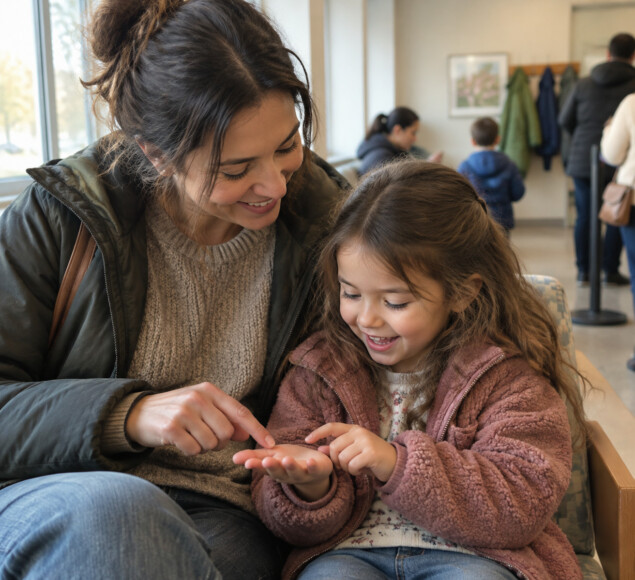
- Finger tracing. Trace a sight word on your child’s back or open palm with your finger and have them guess the word.
- Whisper words. Whisper a sight word and have your child whisper it back. It’s quiet enough for any waiting room and still counts as practice.
- Air writing. Write a sight word in the air with your finger, one letter at a time, and have your child call out the word as you go.
- Rhyme or not? Say two words and have your child decide whether they rhyme, slipping in sight words like “said” and “red” or “was” and “because.”
A few ground rules that make it work
- Keep it short. Thirty seconds to two minutes is plenty — this is meant to be a quick moment, not a session.
- Let your child pick the game. Giving them a choice between two options makes it feel like fun they’re opting into, not practice being imposed on them.
- Mix in words they already know. A game that’s all hard words stops being fun fast. Sprinkle in easy wins alongside the tricky ones.
- Stop before it feels like a test. If your child starts to disengage or guess randomly, that’s the signal to wrap up, not push through.
The takeaway
You don’t need a screen, a worksheet, or a set aside block of time to give your kindergartener or 1st grader meaningful sight word practice. The next time you’re stuck waiting somewhere with a few spare minutes, try one of these games instead of reaching for a device — it adds up to real practice, and it might be the part of the wait your child likes best.