Decodable Books vs. Leveled Readers: What’s the Difference, and Why It Matters Right Now
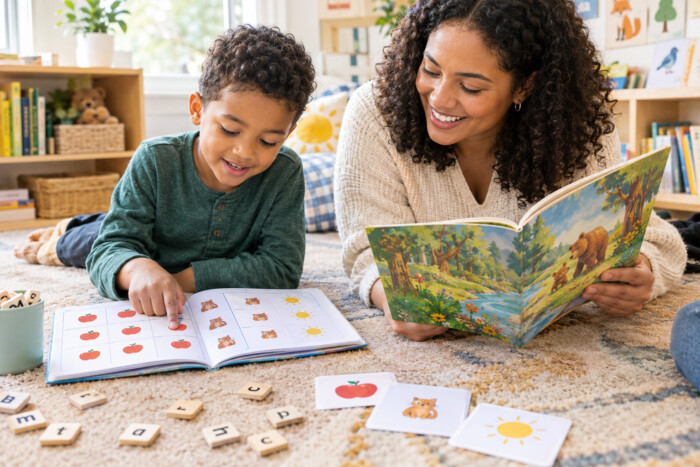
If you’ve looked through your kindergartener or 1st grader’s book bag lately, you may have noticed two very different kinds of “easy” books coming home — some with a letter or number on the cover, others that just look like simple picture books. These are usually decodable books and leveled readers, and while they can look similarly simple on the shelf, they’re built to do different jobs. Knowing which is which can help you understand what your child is actually practicing when they read one at home.
What decodable books actually are
A decodable book is written to use only the letter-sound patterns a child has already been taught, plus a small handful of sight words. If your child has just learned short vowel sounds, a decodable book at that stage will stick almost entirely to words like “cat,” “hop,” and “sun” — no tricky spelling patterns sneaking in early. The point isn’t a gripping plot; it’s giving your child real, successful practice applying the exact phonics skill they just learned, without getting tripped up by patterns they haven’t covered yet.
What leveled readers actually are
A leveled reader is sorted by overall difficulty — sentence length, vocabulary, repetition, and picture support — rather than by which phonics patterns it uses. That makes leveled readers great for building reading stamina, vocabulary, and a love of stories, but it also means they can include words a child hasn’t been taught to decode yet. Pictures and repeated sentence patterns are often doing some of the heavy lifting, which is exactly why a child can seem to “read” a leveled book fluently while still relying on memorization or picture cues more than actual decoding.
Why the difference matters in kindergarten and 1st grade
Early on, decodable books are where the real decoding practice happens — they’re the training wheels that let a brand-new phonics skill get used immediately and successfully. Leveled readers still have an important place, especially for read-aloud time and building a love of books, but leaning on them too early for independent reading practice can accidentally encourage guessing from pictures and patterns instead of sounding words out. Neither book type is “better” — they’re simply built for different parts of learning to read, and both matter at this stage.
How to use both without overthinking it
- Ask the teacher which decodable stage your child is on. This tells you which letter-sound patterns are fair game for independent reading practice right now.
- Use decodables for independent reading practice. These are the books where your child should be doing the actual sounding-out, with minimal help from you.
- Save leveled and richer books for read-aloud time. These are a great way to build vocabulary and a love of story without worrying whether every word is decodable yet.
- Don’t worry if decodables sound a little flat. “The cat sat on the mat” isn’t meant to be riveting — it’s meant to be practice your child can do successfully on their own.
The takeaway
Decodable books and leveled readers aren’t competing systems — they’re two different tools for two different jobs. Decodables give your kindergartener or 1st grader a chance to practice exactly the phonics skills they’ve just learned, while leveled and richer books build vocabulary, stamina, and a love of stories. Knowing which book in the bag is doing which job makes it a lot easier to support your child’s reading at home, without second-guessing whether the “easy” book is actually helping.