
Building a Home Reading Routine That Actually Sticks
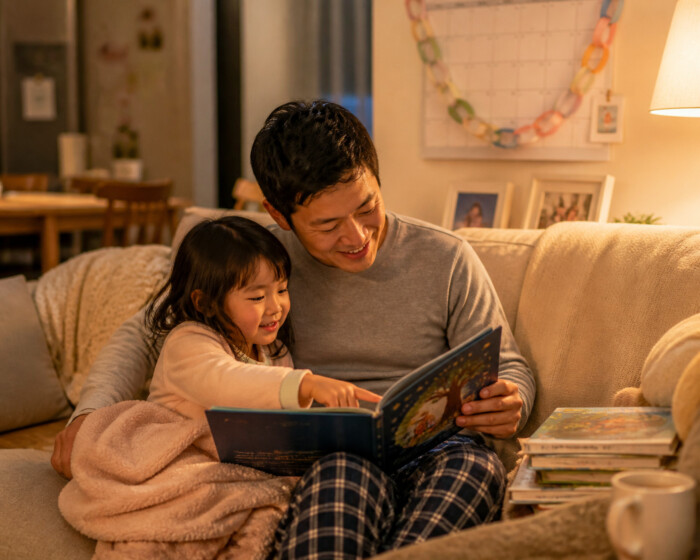
Every parent hears the same advice: read with your child every day. It’s true, and it works — but “just read every night” is easier said than done when dinner runs late, homework is a fight, and bedtime is already a scramble. The families who make reading time actually happen aren’t the ones with more willpower. They’re the ones with a routine that’s realistic enough to survive a busy week.
The good news is that a home reading routine for a kindergartener or 1st grader doesn’t need to be long, fancy, or perfectly consistent. It just needs to be small enough to repeat and specific enough that everyone knows what to expect. Here’s how to build one that sticks.
Why routine matters more than time spent
Early readers build skills through repetition, not intensity. A child who reads for ten predictable minutes almost every day will out-progress a child who reads for an hour once a week. Routine also does something less obvious but just as important: it removes the daily negotiation. When reading time happens at the same point in the day, kids stop asking “do we have to?” and start expecting it, the same way they expect brushing their teeth.
Pick an anchor point, not a strict time
Instead of promising yourself “we’ll read at 7:00 every night,” attach reading to something that already happens reliably. This is called anchoring, and it’s far more forgiving than a clock time when life gets messy.
- Right after the bath, before pajamas
- During the after-school snack, before screens turn on
- As the very last thing before lights-out
- On the car ride home, with an audiobook or a partner reading a sign-based “I spy” game
Anchoring works because it doesn’t rely on remembering — the first activity reminds you to do the second.
Keep the session short and low-pressure
For kindergarten and 1st grade, 10 to 15 minutes is plenty. Longer sessions often backfire because a tired child starts to associate reading with frustration instead of comfort. A short, positive session most days beats a long, tense session occasionally.
- Let your child choose the book, even if it’s the same one for the tenth night in a row
- Mix “read to me” nights with “I’ll read to you” nights — both build vocabulary and a love of books
- Stop while it’s still fun, not when everyone is worn out
Make it visible
Young kids respond well to seeing progress. A simple paper chain, a sticker calendar, or a jar of pom-poms that fills up after each reading session gives your child a concrete sense that the routine is real and building toward something. It doesn’t need a prize at the end — the visual itself is usually motivating enough.
Build in sight word and vocabulary practice naturally
A home reading routine is also the easiest place to reinforce sight words and new vocabulary without it feeling like a worksheet.
- Pause on a sight word your child is learning and let them “find it” on the page
- Ask what a new or interesting word might mean before telling them
- Talk about the pictures — describing what’s happening builds vocabulary just as much as the text does
- Reread favorite books often; repetition is exactly how sight words become automatic
Expect the routine to bend, not break
Some nights will be missed. Trips, illness, and chaotic weeks happen to every family. The goal isn’t a perfect streak — it’s a routine sturdy enough to pick back up the next day without guilt or a big production. If a night is skipped, simply return to the anchor point the following day and carry on.
The takeaway
A home reading routine doesn’t need to be elaborate to work. Anchor it to something that already happens daily, keep sessions short and pressure-free, make progress visible, and use the time to naturally reinforce sight words and vocabulary. Consistency, not length, is what turns reading time into a habit your child looks forward to — and one that quietly builds the skills they’ll rely on for years to come.