Free Word Quizzes for Kids: A Fun Way to Practice Sight Words and Vocabulary
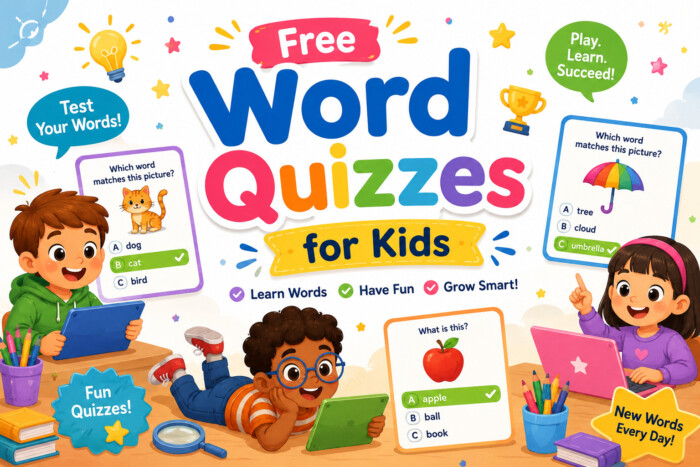
When a child is learning to read, practice is everything. But practice does not have to mean flashcards and worksheets. A short, friendly quiz can turn review into a game, and a game is something children actually want to come back to. That is the whole idea behind the word quizzes at Little Word Lab: simple, screen-friendly practice that helps young readers build confidence one word at a time.
Here is a look at how quizzes help early readers, which quizzes are available, and how to get the most out of them at home or in the classroom.
Why quizzes help young readers
A quiz does something a worksheet cannot: it gives a child an instant, clear answer. They choose, they find out, and they move on. That quick feedback loop keeps attention high and turns each question into a tiny, satisfying win.
Quizzes also encourage a special kind of practice called retrieval. Instead of simply rereading a word, a child has to pull the answer out of memory. That small mental effort is exactly what helps a word move from “sort of familiar” to “instantly known.” And because each quiz is short, children finish feeling capable rather than worn out, which is the feeling you want them to carry into their next book.
The three quizzes to try
Little Word Lab keeps things simple with three focused quizzes, each aimed at a different early-reading skill.
Sight Words Quiz
The Sight Words Quiz gives children practice with the common words that appear on nearly every page they read, words like the, and, said, and was. Many of these do not follow regular spelling rules, so recognizing them quickly makes a real difference in reading fluency. This one suits both kindergarten and first grade.
Kindergarten Quiz
The Kindergarten Quiz is built for the youngest learners, with simple word practice grounded in everyday, concrete things. It is a gentle, low-pressure place to start for children who are just beginning to connect words and meaning.
Nouns Quiz
The Nouns Quiz helps children practice common nouns, the naming words for people, places, animals, and objects. It is a friendly introduction to a child’s first real grammar concept, taught through familiar, recognizable words rather than rules.
How to use the quizzes at home or in class
A few small habits make these quizzes far more effective.
- Keep it short and regular. A few minutes most days beats one long session once a week. Consistency is what builds lasting recognition.
- Celebrate effort, not just correct answers. A child who tried hard on a tricky word still made progress. Praising the effort keeps them willing to try again.
- Revisit the same quiz more than once. The second and third time through is where words really settle into memory, so do not treat a quiz as “done” after one round.
- Pair quizzes with real reading. After a quiz, open a picture book and spot the same words on the page. That connection turns practice into actual reading.
Pair the quizzes with a word list
Quizzes work best alongside a little exposure beforehand. The 100 Common Words list is a natural companion: skim a handful of words together, then head to a quiz to see how many your child can recognize. Pre-teaching a few words first turns the quiz from a test into a confident review.
Start practicing today
The best part of these quizzes is how little they ask of you. No printing, no prep, no setup, just a child, a few minutes, and a handful of words to practice. Pick the quiz that fits your reader and give it a try.
Browse all the word quizzes here and find the right starting point for your young learner.